

Reach Out And Touch Faith
A special holy week edition.

Take second best, Put me to the test
Things on your chest, You need to confess
I will deliver, You know I’m a forgiver
This week is Holy Week and Passover all in one. Throw in there a trip to the moon during a full moon, and things are feeling pretty mystical. For Christians, the week is all about the journey from triumph to betrayal to crucifixion to resurrection–the literal path that Inc. Magazine used to write a story about Schoolhouse (more on that later).
For Jews, it’s passover. Slavery. Wondering. Deserts. Liberation.
Both stories matter.
At the core, they are about liberation.
But before we get to the juicy Inc. story that everyone is gossiping about, we have to look at the other news in the world of entrepreneurship and business this week – cosmically timed:

Glossier announced it would close all but 3 stores and lay off roughly a third of its corporate workforce.

Allbirds closed all stores and sold for pennies on the dollar.
These brands were held up as pinnacles of successful entrepreneurship in the late 2010s. Even if you didn’t take venture capital and follow their path, your path as an entrepreneur in this millennium was shaped by them. It was sold to you that social media, digital advertising, and a strong “following” (hello Jesus!) were the keys to the kingdom of success.
But, as always, when I’m right, I’m right. And I’m going to take this holy week to get meta and quote myself from 2023:
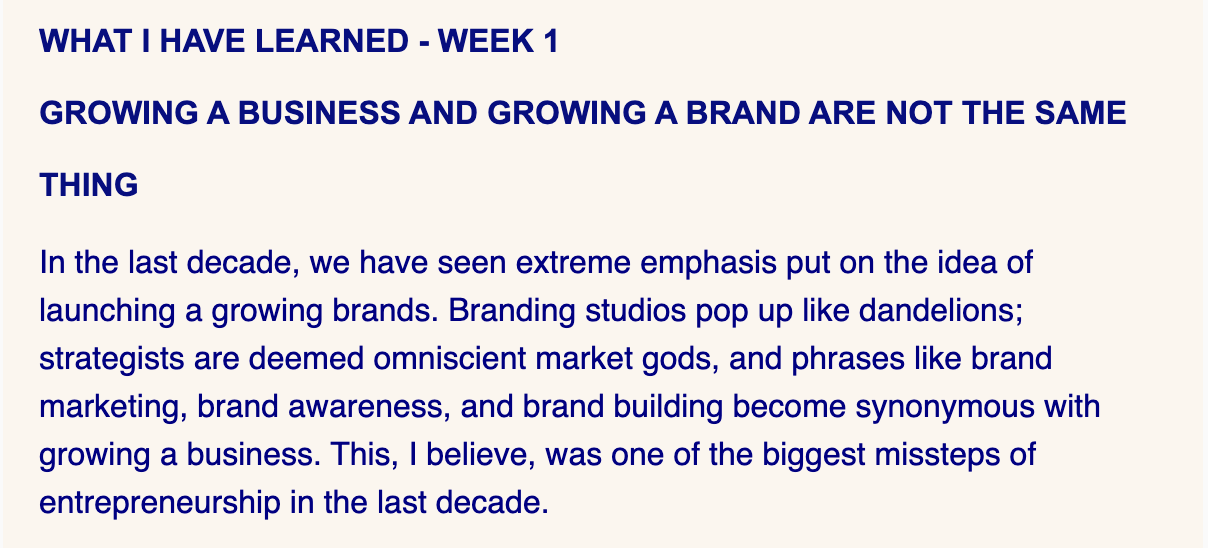
We exchanged our integrity for certainty.
An entire cohort of entrepreneurs followed the lead of brands projected to them from an unformed media. I felt the same way when I read the “well-researched” Inc. piece about Schoolhouse. It may have been well researched, but it missed the most critical parts of the story.

Inc. took the most time-tested mythology in the holiest book and turned it into a story of small, well-meaning entrepreneurs meeting big, bad private equity. I think it should be known that this Substack you are reading right now is only available to you on a platform funded by TCG – the same group that is the villain in the Inc. story.
I have a personal connection with this story. I have never worked with or met anyone at Schoolhouse or Food52, but I did work with a client who was approached in a similar, not the same, manner as Emily Henderson. And so I knew this moment was on the horizon.
What is unfortunate about the Inc. article is that it missed the nuance we so desperately need to be surfaced in this time if we truly care about the future of creativity and commerce.
It’s deeper than a story about growth at all costs. What the moves of Glossier, Allbirds, and Parachute show is that it’s all the same story, and that’s a story about pattern matching and pride on both sides.
What is important to know about marrying investment with growth is that most investors are not operators. They are pattern matchers. It makes sense for numbers people to deploy techniques that make them feel safe. Investing due diligence is all about minimizing risk. Safety. But what investors didn’t realize when they were pattern-matching in our era is that the pattern was a mirage.
Operators tend to do the same thing: find people who share your values. Pattern match. But what are your values, and how do you know who shares them? Schoolhouse seemed to be wooed that Food52 was a “superfan” – flattering, I’m sure. They described the partnership as a natural fit. But what did that mean from an operational perspective? And how did those operational values align with TCG operational values?
The problem with branding your way to values is that those values ring hollow when it comes to operations and growth.
Both are an “outside - in” approach to growth. And if you’ve taken my business growth class, you know that doesn’t work.
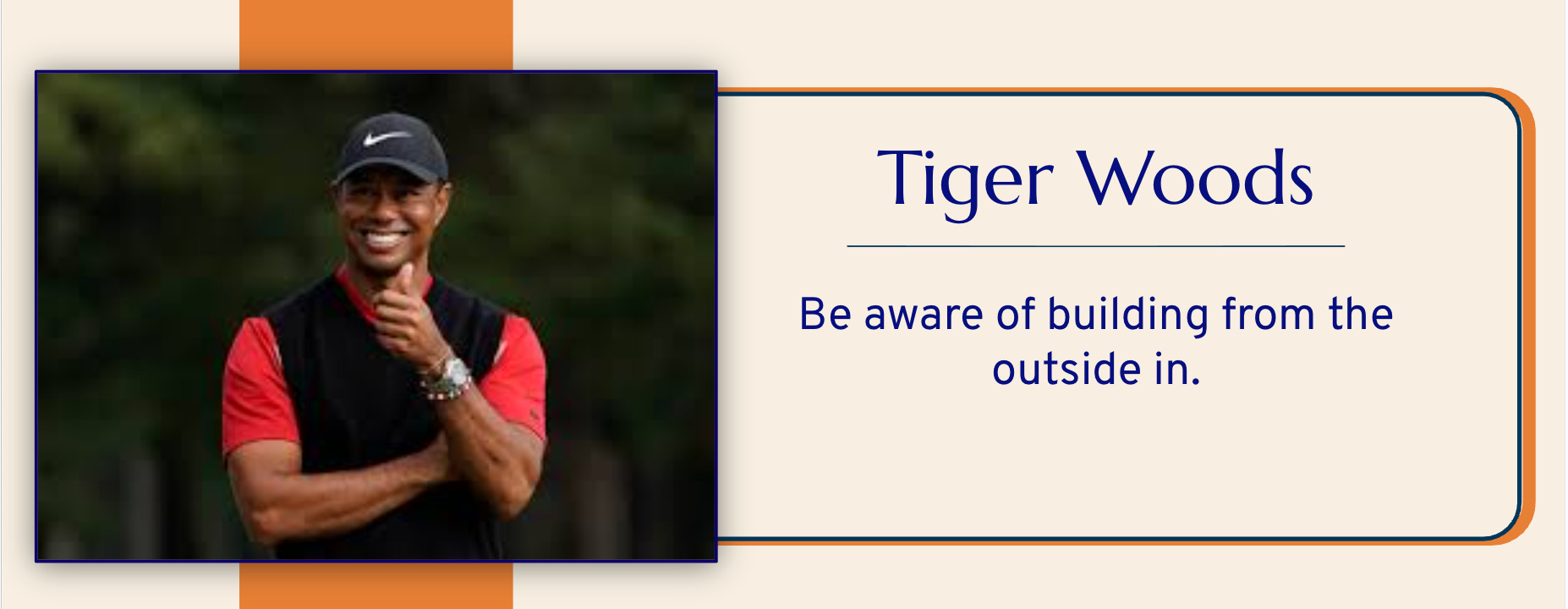
This week, in the midst of all of this news, Tiger Woods crashed his car again. I use Tiger in my culture class to contextualize the dangers of building from the outside in. I feel for Tiger. As the child of an alcoholic, I know the lasting scars addiction leaves on entire families. But he said it so clearly in his 30 for 30 documentary years ago: Beware of building from the outside in. He knew his downfall was the brand he spent so much time trying to uphold.
I cannot stress enough how different it is to think about operations instead of brand.
If this week is showing us anything, it is that most brand strategies over the last decade were built around attention rather than loyalty. Followers, clicks, viral moments, likes: all of this is focused on grabbing attention, not building loyalty.
What is unfortunate about Schoolhouse is that they unknowingly traded the hard work they had done to cultivate loyalty to a pathway that operated with the lens of attention. They didn’t speak the same language, even if they thought they shared the same values. This isn’t a story of crucifixion. At its core, it is the Tower of Babel.
Schoolhouse spoke the language of operations. The rest of the group spoke the language of attention.

I want to close with an inspiring story. This week, quietly (had to do it!), another entrepreneur sold his legacy business for $29 Billion. His name is Nathan Kirsh. I imagine not one soul who reads this knows his name—I hadn’t even though I had been there myself. He is the founder of Restaurant Depot! Shout-out to all my restaurant workers who have made a last-minute trip to the depot in a pinch.
Kirsh started Jetro in Brooklyn in 1976. If you haven’t made the trip there yourself, it’s quite certain that any restaurant you have ever eaten at has an account at their local depot. What is interesting to me about the differences between these legacy brands is that Kirsh’s story could be seen as boring in today’s world. It’s why you’ve never heard of him. There are no clicks, no likes. No viral moments. No following. But everyone uses them. They were reliable. Dependable. Loyal.
I hope this era is over. For consumers. For creatives. For capitalists. It is not working. Not because one party is good and another is evil, but because, as Tiger has been screaming at us, building from the outside in doesn’t work. Branding is not what you thought it was.
The opposite of brand isn’t boring. The opposite of brand is bedrock.
Operations will deliver. They are also a forgiver! Reach out and touch faith!
RESCHEDULE: SUBSTACK LIVE! WHY DOES AI FAWN?
TBD! If you tried to join us yesterday, know you did not miss it. We will be rescheduling this event - stay tuned!
I will be joined by one of my favorite colleagues, Luis Mojica, to talk about why AI fawns, how we can stay embodied, and his new book! I love these conversations with Luis, and this one is sure to be fun and insightful!
APRIL WORKPLACE 2.0 WORKSHOP: Stop Generating. Start Creating.
Details: Thursday, April 30th 12 pm-1pmET via Zoom
It’s free - email me to register: holly@pyramid.work
By April, most entrepreneurs have spent Q1 producing content, activity, and output that look like building but belong to someone else’s playbook. In this workshop, we’ll audit what Q1 actually revealed about your business culture, trace what is genuinely and distinctly yours, and prune what doesn’t belong. You’ll leave with a recommitment to Q2 building from your own wellspring, not someone else’s template.
For those of you who joined in January and February, we will have the opportunity from 1 pm-1:30pmET to review the progress on your accountabilities.